Wet Anesthesia Circuits Are an Infection Risk: How to Clean and Dry Breathing Systems Properly
Why residual moisture in anesthesia breathing circuits breeds bacteria, how to clean reusable circuits properly, and how to dry corrugated hoses in minutes instead of hours.
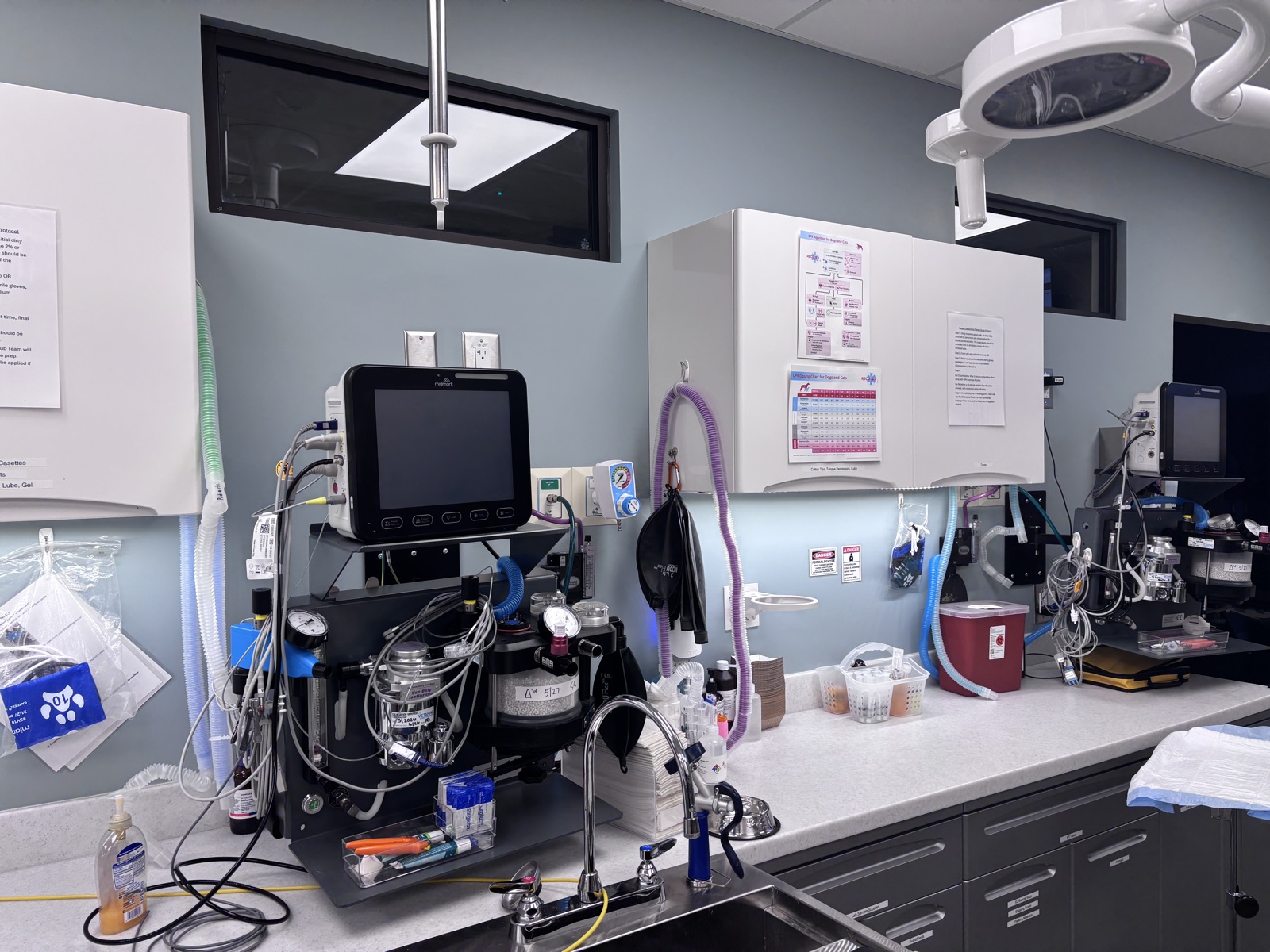
Why Clinics Reuse Circuits (And Why That’s Fine)
Disposable anesthesia breathing circuits cost eight to fifteen dollars each. A busy practice doing eight to twelve procedures a day would burn through $24,000 to $65,000 per year on single-use circuits. That math doesn’t work for most clinics.
So circuits get cleaned and reused between patients. Rebreathing circuits (circle systems, Y-circuits for patients over 7 to 10 kg) and non-rebreathing circuits (Bain, Jackson Rees for smaller patients and exotics) all go through the same cycle: use, clean, reuse. This is standard practice, not a shortcut. But the cleaning process has a weak point that most clinics underestimate, and it’s not the cleaning itself. It’s the drying.
What Grows Inside a Wet Hose
After a circuit gets soaked in chlorhexidine or enzymatic cleaner and rinsed, the corrugated interior is wet. And corrugated tubing is designed to trap things in its ridges. That includes water. You can shake a circuit, hang it up, and still find moisture inside hours later.
Warm, dark, moist corrugations are exactly the kind of environment where bacteria and mold thrive. Studies on anesthesia equipment contamination have isolated Pseudomonas aeruginosa, Klebsiella pneumoniae, Acinetobacter baumannii, and various mold species from circuits that weren’t dried properly. These organisms form biofilms in the ridges between corrugations: structured communities that resist surface disinfection the next time the circuit goes through cleaning.
A circuit that looks clean but still holds moisture in its corrugations isn’t ready for patient use.
The Cleaning Part (You’re Probably Doing This Right)
Proper circuit reprocessing follows a consistent sequence:
- Disassemble immediately after the procedure. Separate inspiratory and expiratory limbs, Y-connector, adapters.
- Soak in cleaning solution (chlorhexidine, enzymatic cleaner, or glutaraldehyde-based disinfectant per your protocol and the circuit manufacturer’s instructions).
- Rinse thoroughly with clean water to remove all chemical residue.
- Dry completely before reassembly and storage.
- Inspect for cracks, discoloration, or degradation before putting it back in service.
Steps one through three are well understood and consistently performed. Step four is where things break down. Not because staff skip it, but because adequate drying takes far longer than the surgical schedule allows.
The Real Bottleneck
Air-drying corrugated hoses takes four to eight hours hung vertically. The actual time depends on humidity, hose diameter, corrugation depth, and how much air circulation your drying area gets.
For a clinic running a full surgical day, that means circuits cleaned after morning procedures aren’t dry until late afternoon. Circuits cleaned after afternoon cases aren’t dry until the next morning, if conditions are good.
So clinics adapt. Some maintain three to four complete circuit sets to keep a dry rotation available. Some accept using circuits that aren’t fully dry yet. Staff shake circuits, hang them over door handles, drape them near HVAC vents. These methods are inconsistent, unverifiable, and take up space nobody has.
Why “Close Enough” Isn’t
The problem isn’t puddles of water. Those are obvious. The problem is the thin film of moisture trapped in corrugation valleys that you can’t see or feel from outside the hose. Even a small amount of residual moisture in a warm, sealed circuit is enough for microbial proliferation.
Biofilm that establishes in corrugation ridges is especially stubborn. The next soak-and-rinse cycle may kill surface organisms, but the biofilm matrix in the ridges stays intact. The moment that circuit goes on another patient (warm, humid gas flowing through), the biofilm repopulates.
Complete drying after every cleaning cycle breaks that loop.
Using Equipment You Already Own
The fix is straightforward: push warm, moving air through the circuit instead of waiting for still air to do the job. Warm air evaporates moisture from every corrugation, inside out, in minutes instead of hours.
Most veterinary surgical suites already own a forced-air warming unit, typically a 3M Bair Hugger Model 675 or 775. These units sit idle between patient warming sessions. Routing that warm airflow through a cleaned circuit, by connecting the unit’s hose outlet to the corrugated tubing, drives moisture out of every ridge from the inside.
The air temperature from a forced-air warming unit is warm but not hot, well within safe ranges for standard circuit materials. You’re just putting idle capacity to work in equipment you already have.
Two Ways to Dry
Depending on throughput, two configurations work well:
Parallel: Dry several individual hoses at the same time so multiple circuits move through the cleaning cycle at once. Best when throughput matters.
End-to-end: Route air through a complete inspiratory-plus-expiratory circuit in one continuous path. This covers the full internal length from connector to connector, including the Y-piece junction where moisture tends to collect. Best when thoroughness matters more than speed.
Either way works with standard 22mm anesthesia connectors, rebreathing circuits (circle systems, Y-circuits), and non-rebreathing circuits (Bain, Jackson Rees).
What the New Timeline Looks Like
With forced-air drying, circuit turnaround changes completely:
- Disassemble right after the procedure (2 minutes)
- Soak per protocol (10 minutes)
- Rinse thoroughly (3 minutes)
- Connect to dryer, run warm air (10 to 15 minutes)
- Inspect and reassemble (2 minutes)
Total: about 30 minutes from table to ready. Compare that to four to eight hours of passive drying. Instead of three to four circuit sets per station, one to two sets can maintain rotation even on a heavy surgery day.
The Bair Hugger product ecosystem also includes the cage passthrough adapter for recovery warming and the cage runs extension for large patients, so one warming unit covers three use cases.
Drying Isn’t Optional
A cleaning protocol that ends at “rinse and hang” is incomplete. The drying step determines whether you’re preventing microbial regrowth or enabling it. Treating drying as an active, timed process instead of a passive afterthought is the single biggest improvement most clinics can make to their circuit workflow.
This article is for informational purposes only. VetBog products are accessories. Always follow your facility’s clinical protocols. Brand names are trademarks of their respective owners, used for equipment identification under nominative fair use.
Frequently Asked Questions
How often should anesthesia circuits be cleaned?
After every patient. Disassemble, clean with an appropriate solution per your infection control protocol, rinse thoroughly, and dry completely before reuse. Every time.
Can you autoclave anesthesia breathing circuits?
Some silicone circuits are autoclavable (check manufacturer specs for yours specifically). Most corrugated plastic and rubber circuits used in veterinary practice are not. Chemical disinfection followed by thorough drying is the standard approach for those.
How long does forced-air drying take?
Ten to fifteen minutes with warm air flowing through the full length of the tubing. Compare that to four to eight hours of passive air drying. Exact time depends on hose length, corrugation depth, and how wet the circuit is after rinsing.
Is it safe to reuse circuits between patients?
Yes, when properly cleaned and dried. Reuse is standard in veterinary anesthesia. The critical factor is making sure circuits are completely dry before the next patient. That’s where most clinics have a gap in their process.