7 Veterinary Clinic Equipment Problems That Waste Time, Money, or Both
The most common equipment workflow problems in veterinary clinics, from unsecured CO2 sensors to improvised cage warming to scattered FAST scan supplies, and practical fixes for each.
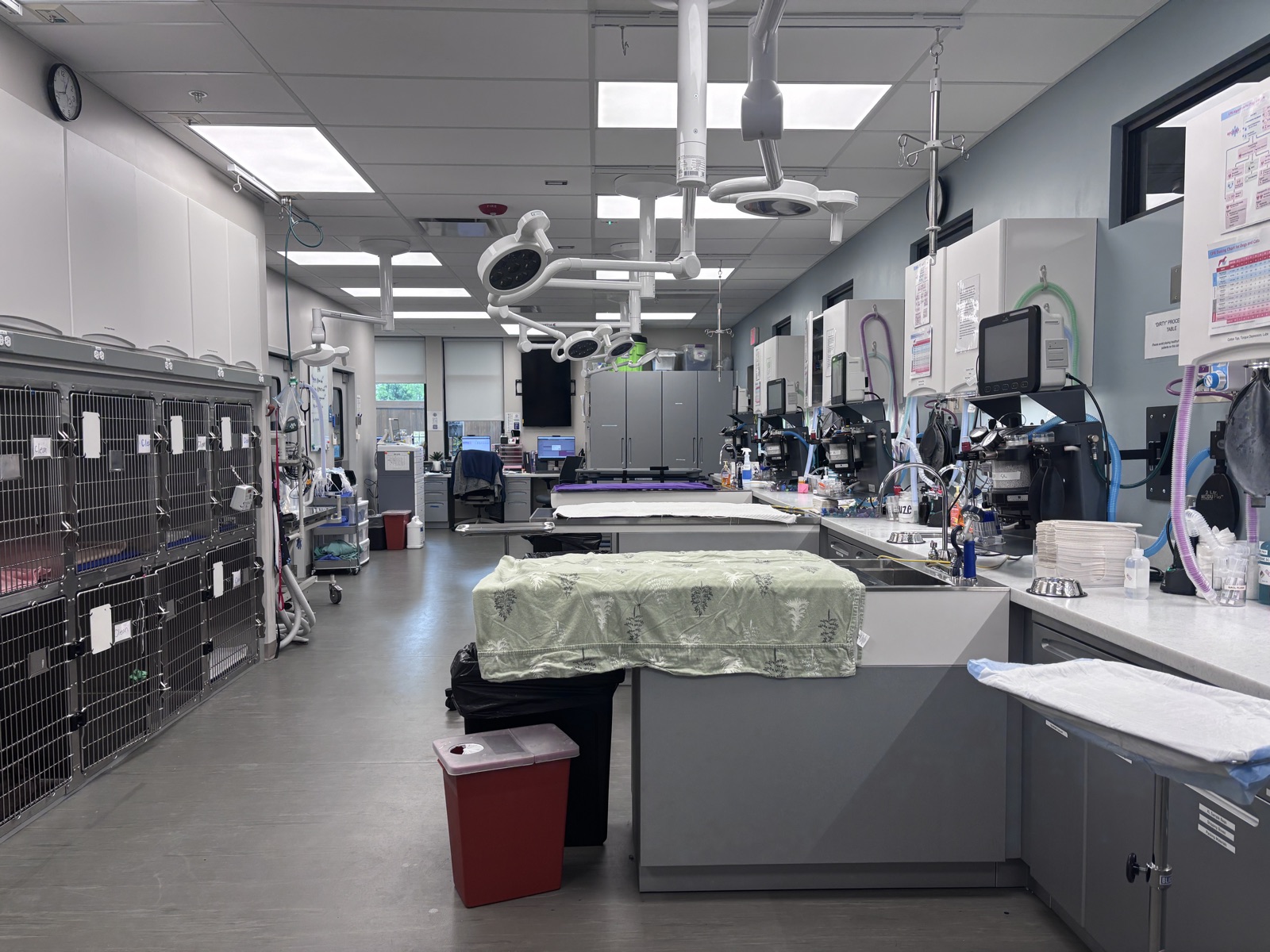
The Workaround Culture
Every veterinary clinic has them. The towel stuffed behind a cage door to hold a warming hose in place. The zip ties securing a CO2 sensor to a monitor arm. Syringes rubber-banded to the side of an ultrasound cart. These workarounds become so routine that staff stop noticing them. They’re just how things work here.
But there’s a difference between “normalized” and “optimal.” Each improvisation costs something: time per use, risk per patient, or cognitive load on staff who are already stretched thin. And the common thread behind most of these workarounds is the same problem: veterinary clinics use equipment designed for human hospitals, adapted for animal medicine, without the accessories that make the adaptation work properly.
Here are seven problems we see over and over, and what it takes to fix each one.
1. Warming Hoses That Don’t Fit Through Cage Doors
Forced-air warming units like the 3M Bair Hugger are common equipment for patient warming during surgery. But when a post-op patient moves to a recovery cage, the hose doesn’t fit through a closed cage door. So staff prop the door open with a towel, thread the hose through the bars at an angle that kinks it, or tape it to the bars.
A propped cage door is an escape risk for any dysphoric patient coming out of anesthesia. A kinked hose cuts airflow and defeats the purpose. Tape on stainless steel doesn’t hold when a recovering dog bumps into it.
A cage passthrough adapter creates a sealed port in the cage door ventilation slot. Hose goes through, door closes and latches, and the hose connects to a 3M warming blanket or gown on the patient inside, which is how the manufacturer’s manual says the unit is used: never with the hose alone, and never with the hose touching the patient. For the full picture on why this matters clinically, see our post on post-operative hypothermia.
2. Giant Breed Patients with No Warming Solution
Compact cage adapters solve the problem for standard cage banks. But your biggest patients don’t recover in standard cages. Post-orthopedic dogs, abdominal surgery cases, and giant breeds go into floor-to-ceiling runs (typically 78 inches tall). The distance from the gate to the patient is much greater, and the gate configuration is different.
Without something built for runs, large patients either go without active warming or staff resort to the same propped-door workarounds, which are even riskier on run gates that a big dog can push through.
A cage runs extension connects onto the base passthrough adapter to bridge the extra distance. One base, one extension: both cage types covered.
3. CO2 Sensors Dangling from Cables
Capnography (continuous ETCO2 monitoring) is one of the most important safety monitors during anesthesia. But sidestream CO2 sensors like the Philips Respironics LoFlo ship with no mounting hardware for any specific monitor. The module ends up sitting loose on top of the monitor, hanging from its cable, or held in place with tape.
Cable strain on the 8-pin Lemo connector causes intermittent contact. Vacuum leaks at the sampling line connection produce false readings. A dropped module damages the infrared optics. Philips and Health Canada have issued safety communications specifically about LoFlo cable damage from strain during normal use.
A CO2 sensor mount bolts to existing screw points on Midmark 8019 series monitors. The sensor sits secure, the cable routes cleanly, and the connector isn’t under constant strain. More on why capnography matters: veterinary capnography guide.
4. FAST Scan Supplies Scattered Across the ER
FAST scans are performed on the most critical ER patients. AFAST, TFAST, and Vet BLUE protocols need rapid bedside ultrasound, and the tech performing the scan needs probes, coupling gel, syringes, needles, sample tubes, and gauze all within reach.
Portable ultrasound units don’t come with meaningful storage. Supplies end up in drawers across the room, in pockets, or wherever the last person left them. When the tech has to leave a crashing patient to find a syringe for abdominocentesis, that’s time lost.
A FAST Scan Supply Pocket puts gel, syringes, and aspiration supplies directly on the machine. Everything travels together. Full writeup: FAST scan workflow organization.
5. Wet Anesthesia Circuits Reused Before They’re Dry
Anesthesia breathing circuits are cleaned and reused between patients. After soaking in chlorhexidine and rinsing, corrugated hoses are wet inside. Every ridge traps water. Air-drying takes four to eight hours.
In a busy practice, that turnaround time means circuits get put back in service before they’re fully dry. Residual moisture in warm, dark tubing is where bacteria and mold establish themselves. Pseudomonas, Klebsiella, and Acinetobacter have all been isolated from inadequately dried anesthesia equipment.
The fix is forced air. Connect a cleaned circuit to the hose outlet of a forced-air warming unit the clinic already owns and run warm air through the corrugations, and the hoses dry in minutes instead of hours. One caveat: the 3M Bair Hugger operator’s manual says not to operate the unit with the hose detached from a 3M blanket or gown, so drying circuits this way is outside the manufacturer’s instructions and is a call for whoever sets your equipment policy. For the full story on circuit cleaning, see anesthesia circuit cleaning and drying.
6. Oxygen Tanks That Shift During Transport
E-cylinder oxygen tanks on transport gurneys are usually held by a single stem-screw at the tank head. That’s fine when the gurney is stationary. During transport, tanks sway, contact each other, and risk valve damage or regulator misalignment.
Staff wedge towels between tanks or add improvised straps. Nothing standardized, nothing reliable across different gurneys.
A dedicated stabilizer solves it: a separator that keeps tanks apart, plus a secondary rail clamp beyond the OEM stem-screw. Standardized options that fit across different gurneys are scarce, which is exactly why so many clinics fall back on wedged towels.
7. The Accessories Nobody Makes
This is the underlying problem behind all the others. Patient monitors, warming units, anesthesia machines, and transport gurneys are designed for human hospitals. Veterinary clinics adapt this equipment for animal patients, but the accessories for the human configuration don’t fit vet workflows.
Manufacturers rarely make veterinary-specific mounts, adapters, or brackets because the vet market is too small to justify the R&D. So clinics improvise. And the improvisation becomes permanent.
The gap between “this equipment works” and “this equipment works well in a vet clinic” is where accessories designed for the clinic fill in.
What All This Actually Costs
It’s worth adding up:
- Time: Gathering FAST scan supplies, waiting hours for circuits to air-dry, fiddling with tape and propped doors on every post-op patient. Minutes per task, multiplied across every case, every day.
- Risk: Propped cage doors, unsecured monitoring equipment, wet circuits. Each one introduces something avoidable into daily operations.
- Staff frustration: Every workaround is tribal knowledge. The new hire doesn’t know which towel goes where. That’s training burden that scales with turnover.
Not every problem here needs a product. Some need better protocols, some need training. But when the problem is “this equipment doesn’t connect to that equipment,” a physical adapter is the right answer.
Browse all veterinary clinic accessories
This article is for informational purposes only. VetBog products are accessories. Always follow your facility’s clinical protocols. Brand names are trademarks of their respective owners, used for equipment identification under nominative fair use.
Frequently Asked Questions
Where do veterinary clinics buy equipment accessories?
Through veterinary distributors (Patterson, Henry Schein Animal Health, MWI, Jorvet), directly from manufacturers, or from specialty vendors. For niche accessories that major distributors don’t carry, direct-to-clinic vendors fill the gap.
Why don’t equipment manufacturers make veterinary-specific accessories?
Most monitoring and anesthesia equipment is designed for human hospitals and adapted for vet use. The veterinary market is a fraction of the human market size, so OEMs rarely justify the tooling for vet-specific configurations.
How do I know if a workaround is “good enough”?
If it’s repeatable, sanitary, doesn’t create patient risk, doesn’t require a door to be propped open or equipment to be unsecured, and adds no extra time per use, it might be fine. If it fails any of those tests, it’s worth replacing.
What should I fix first?
Start with anything that affects patient safety (warming continuity, monitoring equipment security). Then tackle workflow bottlenecks that cost the most cumulative time across your daily caseload.